The fastest way to find a genuinely dog-friendly patio near you is to filter by specific attributes on Yelp, Google Maps, or BringFido, then call the venue directly to confirm the policy is current before you show up. "Dog-friendly" tags online are often out of date or vague, so one quick phone call separates the real thing from a shrug-and-see situation. What you're hunting for is a patio with a posted dog policy, designated outdoor seating, leash rules, and staff who actually know the deal, not just a manager who once said "sure, bring the dog."
Best Dog-Friendly Patios Near Me: Quick Checklist & Top Picks

Jonah Farrell
29 May 2026
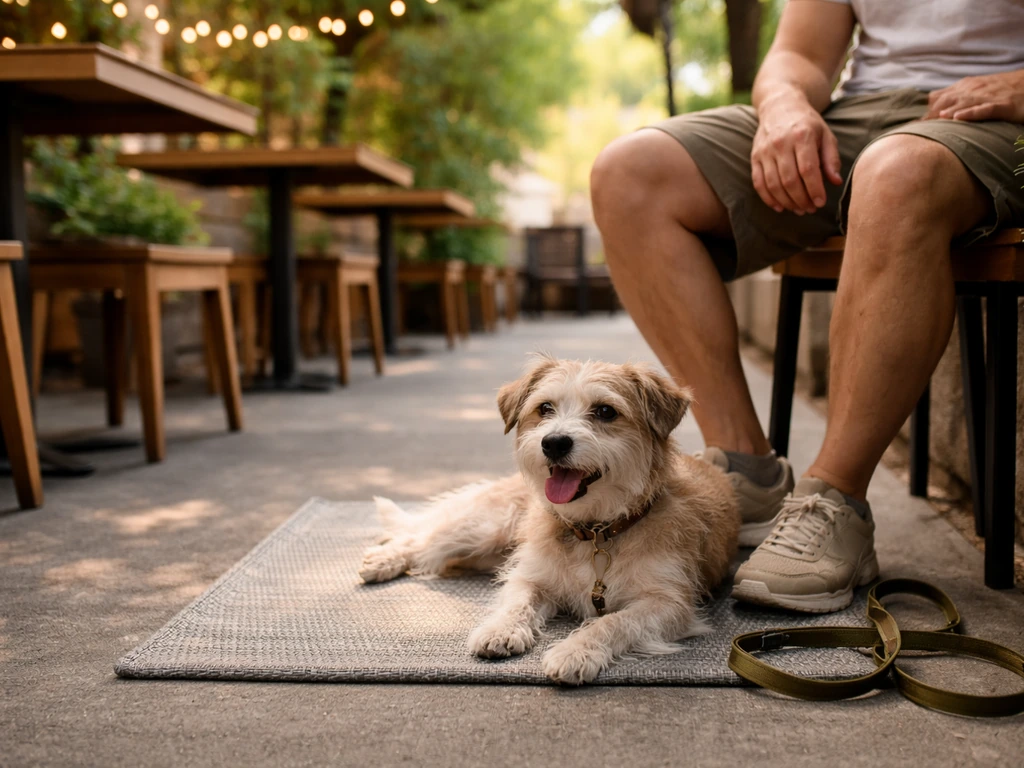
How to find the best dog-friendly patio near you (fast filter checklist)
Start your search on three platforms at once: Google Maps (search "dog friendly restaurants near me" and check the business attributes), Yelp (use the dedicated "Dog Friendly" filter in the search parameters), and BringFido (their city pages list actual numbers, like 386 dog-friendly restaurants in San Francisco with outdoor tables, so you get a real shortlist fast). BringFido city pages and listings can also help you spot when outdoor seating descriptions include leash policy language like “Leashed dogs are welcome.
” BringFido (their city pages list actual numbers.
Tripadvisor has a pet-friendly restaurant category too, but confirm details directly since listings there can be ambiguous. Once you have a list of five or so candidates, run them through this checklist before you commit.
- Does the venue have an explicit dog policy posted online or on-site? (Look for wording like "leashed dogs welcome on the patio" rather than just a generic "pet friendly" tag.)
- Is the patio fully outdoors? Dogs are typically only permitted in outdoor dining areas, never inside.
- Does the listing mention leash requirements? Leash language ("dogs must remain leashed and under owner control at all times") is a strong signal the policy is formalized, not improvised.
- Is there shade available? A sunny concrete slab in July is rough on dogs, especially brachycephalic breeds.
- Does the venue or listing mention water bowls? Staff providing water is a sign they've actually thought this through.
- Is there a designated pet entrance or a dog-free section of the patio? Both details indicate a structured, health-code-compliant setup rather than a casual allowance.
- Does the patio have enough space for you to create some distance from other dogs or foot traffic if your dog needs it?
- Have you called or checked the venue's website in the last few days to confirm the policy is still active?
If a venue checks off at least six of those eight items, you're in good shape. Fewer than four and it's probably a "sometimes allowed" situation, which isn't what you're after when you've got a dog in tow.
Top criteria that make a patio truly dog-friendly (seating, vibe, rules)
There's a meaningful difference between a patio that tolerates dogs and one that's actually set up for them. Cities like Denver, Long Beach, and others have formal health-department rules that require restaurants to post a "Dog-Friendly Patio" sign if they allow pets. That sign (or its equivalent language online) means the establishment has filed an operational plan with the city, which typically covers leash requirements, cleanup procedures, and food-safety protocols like not allowing restaurant staff to touch or pet dogs while handling food. The municipal operational plan checklist for “Dogs on Patios” also calls for posted signage and includes leash or pet carrier control language, along with procedures for cleanup of dog-waste accidents cleanup procedures. That's the bar you want.
| Criteria | What "truly dog-friendly" looks like | Red flag |
|---|---|---|
| Dog policy | Posted sign or explicit website language with leash rules | "We allow pets sometimes" or no info at all |
| Seating layout | Dedicated dog-friendly section or full outdoor patio access | Only one cramped corner with no buffer from foot traffic |
| Leash rules | Leash required at all times, dog stays by owner's side | "We don't have a rule, just be responsible" |
| Water availability | Staff proactively offers water bowls | No water, owner must bring everything |
| Shade and comfort | Umbrellas, trees, or covered awning over pet-friendly tables | Full sun exposure on pavement with no relief |
| Cleanup procedures | Staff has documented waste-cleanup protocol | No plan, accidents handled case-by-case |
| Noise and crowd level | Moderate energy, manageable traffic near tables | High foot traffic, live music directly adjacent to dog-friendly tables |
| Signage/entrance | Designated pet entrance listed or visible | No guidance on where to enter or sit with a dog |
Vibe matters too. A rooftop bar with tight table spacing and a DJ is technically dog-friendly in some cities, but it's a miserable experience for most dogs and for the people around you. The best dog-friendly patios tend to be relaxed, mid-energy spots: neighborhood breweries with open grass areas, casual restaurants with a back garden, or waterfront spots where the ambient sound is water and conversation rather than thumping bass. If you want help narrowing down the best waterfront patios near me, focus on places that post clear pet policies and have relaxed seating by the water waterfront spots. Think about your dog's experience, not just whether the policy technically permits attendance.
Where to look: by city, neighborhood, and venue type
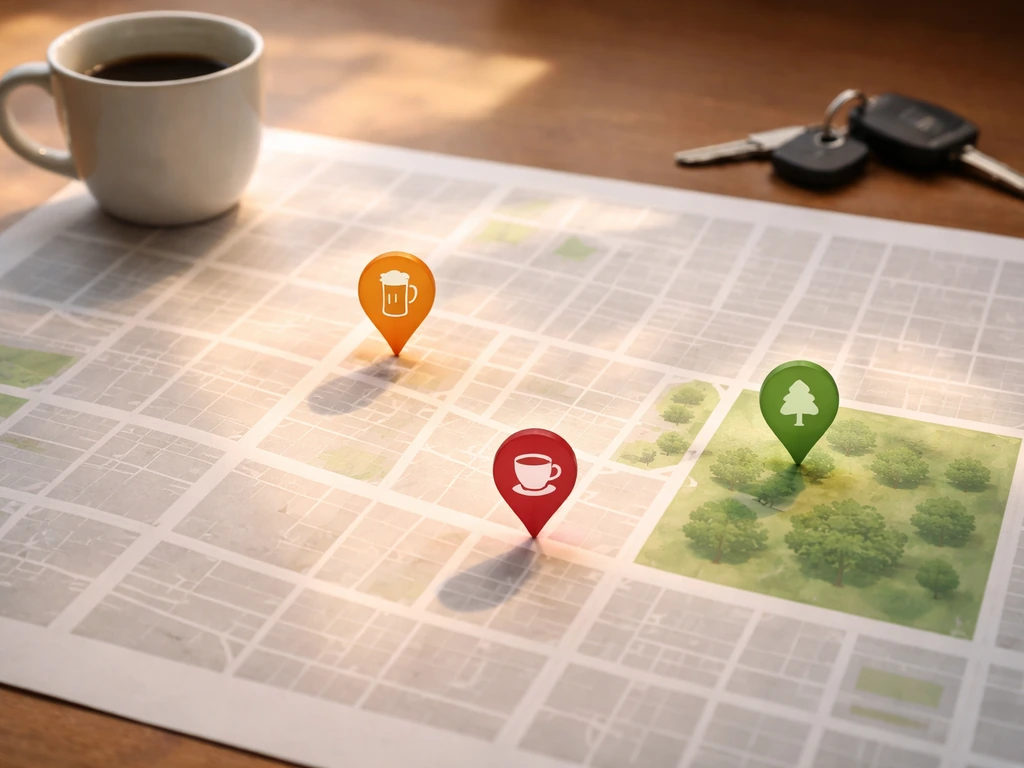
City-level searches are the fastest starting point, and different venue types deliver very different dog-friendly experiences. Breweries are consistently the most dog-forward, especially taprooms with outdoor beer gardens. The culture at craft breweries tends to normalize dogs, staff are usually relaxed about it, and the outdoor space is often generous enough that your dog isn't crammed between tables. Casual patio restaurants are next best, particularly ones that describe themselves as neighborhood spots rather than date-night destinations. Fine dining patios sometimes technically allow dogs but make you feel like you're smuggling contraband, so read the room before booking.
Neighborhood matters just as much as city. In most major US cities, the dog-friendliest patio concentrations are in walkable, residential-adjacent neighborhoods where people actually walk their dogs to brunch. Think Denver's RiNo or Capitol Hill, San Diego's North Park, San Francisco's Mission or Dogpatch (the name is not a coincidence), Austin's East Side, Chicago's Wicker Park, or Seattle's Fremont. These neighborhoods have density of both patios and dog owners, which means venues there have figured out the logistics. If you're in a new city and want to skip the research, just pick a trendy residential neighborhood and start your BringFido or Yelp filter there.
For bars specifically, look for indoor-outdoor bars where the patio is a distinct section rather than a sidewalk wedge next to a busy street. Dogs on sidewalk patios next to high-traffic roads can get overstimulated fast, and leash tangles with passing pedestrians are a real nuisance. A proper dog-friendly bar patio has some physical separation from the street and enough room to spread out. If you're looking for broader patio inspiration beyond dog-specific needs, checking out guides to the best patios nearby or best outdoor seating spots in your city can help you cross-reference which of those top-rated spots also happen to welcome dogs.
Questions to ask before you go (leash policies, water bowls, shade, noise)
A thirty-second phone call before you head out saves everyone a lot of grief. Here's exactly what to ask when you call the venue.
- "Are dogs currently allowed on your patio?" (Don't assume online info is current. Policies change seasonally or when management changes.)
- "Is the whole patio dog-friendly or just a specific section?" (Some Denver venues, for example, require a dog-free portion of the patio as part of their compliance setup, so you may have fewer table options than you expect.)
- "Do dogs need to stay on leash the entire time?" (The answer should always be yes, but you want to hear it confirmed so you know staff will enforce it consistently.)
- "Are there any breed or size restrictions?" (Rare but worth asking, especially at upscale spots or places that have had incidents.)
- "Do you provide water bowls, or should I bring my own?" (A yes is a great sign. A confused pause means bring your own.)
- "Is there shade at the dog-friendly tables?" (Ask specifically, especially in summer months.)
- "How crowded does the patio get, and what are your busiest times?" (For reactive or anxious dogs, arriving at an off-peak time changes everything.)
- "Is there a designated entrance for guests with dogs?" (Some patios have a separate pet entrance to keep dogs out of the main dining flow, which is both a health-code thing and genuinely more comfortable.)
If the person who answers the phone can't answer most of these questions, that's useful information too. It tells you the staff hasn't been trained on the dog policy, which means your experience is going to depend entirely on which server you get. That's fine for a casual beer with a chill dog, but not ideal if your dog needs consistency from the environment.
What to expect on arrival (pet etiquette, cleanliness, peak times)
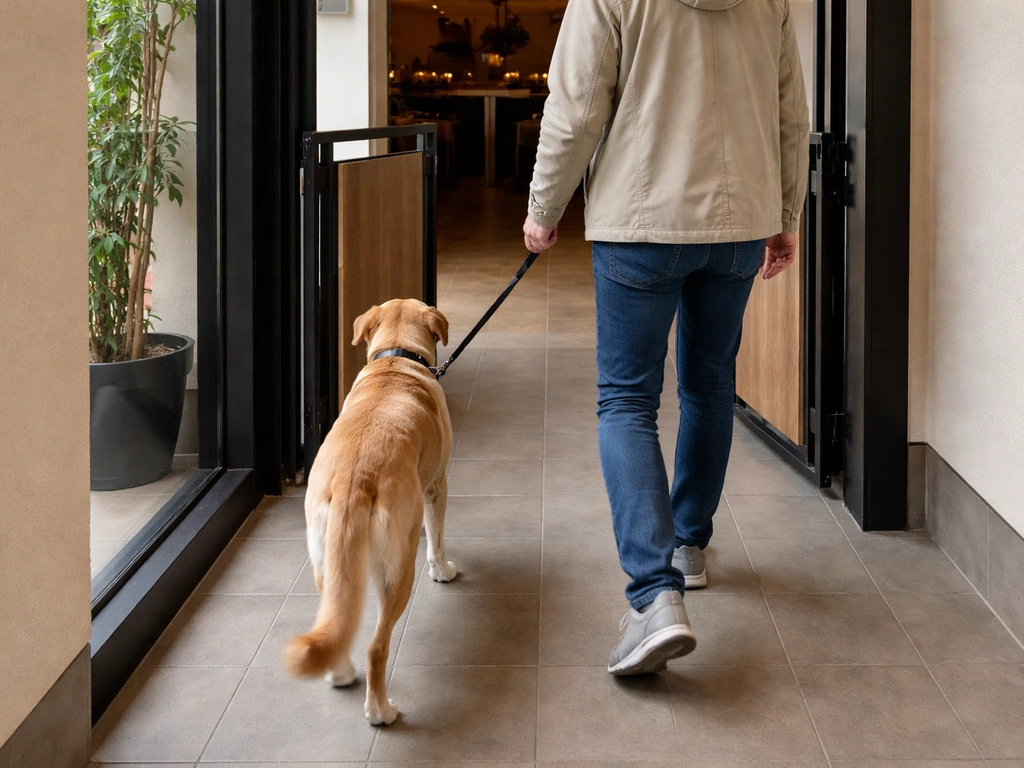
When you arrive, keep the energy low. That means calm voice, no big hellos to the host, and not letting your dog greet every person between the entrance and your table. San Diego Humane Society advice that maps perfectly to this situation: keep arrivals and departures low-key to minimize overstimulation. A dog who sprints to the table already wound up is a dog who's going to have a harder time settling down once you sit. Walk in relaxed, find your table, let the dog sniff around briefly on leash, and then settle.
Use the designated pet entrance if there is one. It's not just a formality. It keeps your dog out of the main dining flow where food-safety rules about animals near food are stricter, and it signals to staff that you know the drill. Once seated, your dog should be on leash the entire time and ideally positioned beside you rather than in the aisle where servers and other patrons will walk past. Most health department rules (Georgia's DPH is explicit about this, for example) require dogs to remain leashed and under owner control at all times, so this isn't optional.
Cleanliness is your responsibility. If your dog has an accident, tell staff immediately. Good dog-friendly patios have a cleanup procedure and staff who know what to do, but you still need to flag it. And bring waste bags regardless, especially if you walked to the patio from a distance. Arriving with a dirty dog who rolled in something, or a dog who immediately marks every table leg, will test even the most dog-forward staff's patience.
Peak times at popular patios mean more dogs, more kids, more foot traffic, and more stimulus for your dog. Weekend brunch (10am to 1pm) and happy hour (4pm to 7pm) on Fridays are typically the busiest windows. If your dog is social and unfazed, those times are fine. If your dog is reactive or anxious, aim for a Tuesday or Wednesday evening, or a weekday lunch. You'll get better service and a calmer environment for both of you.
Dog-friendly patio tips for different dog temperaments and sizes
Not every dog is a natural patio dog, and that's fine as long as you're honest about it before you go. The tips here are organized by temperament because that matters more than size, though size affects logistics too.
Relaxed, social dogs
Lucky you. Almost any well-run dog-friendly patio works for a dog who is calm, leash-trained, and good with strangers. The main thing to watch is overstimulation from prolonged attention. If your dog is a crowd-pleaser and half the patio wants to pet them, that's charming for twenty minutes and then exhausting. Give your dog permission to disengage by turning away from admirers occasionally and settling under your chair. Also bring a mat or small bed if you're planning a longer visit. A familiar surface helps dogs settle faster, even in new environments.
Reactive or leash-reactive dogs
This is where patio selection really matters. A leash-reactive dog (one who barks, lunges, or strains toward other dogs or people when on leash) can have a great time at a patio if the layout gives you enough space to stay below their threshold. Threshold is the distance at which your dog notices a trigger but doesn't react. Wisconsin Humane Society describes it well: inside the threshold, the dog fixates and stops responding to you.
Outside it, they notice but stay engaged. Pick patios where you can position your back to foot traffic, sit in a corner, or maintain at least ten to fifteen feet between your dog and high-traffic walkways. If your dog starts reacting, calmly move further away rather than waiting it out.
Best Friends Animal Society notes that retreating when a dog is reacting actually teaches them that the trigger can be made to go away, which is a healthier response pattern than just grinding through it.
Anxious or noise-sensitive dogs
Avoid patios with live music, street festivals nearby, or high ambient noise like outdoor kitchens or busy intersections. Look for patios with some physical shelter (walls, hedges, pergolas) that reduce visual stimulus along with noise. If your dog shuts down or freezes in overwhelming environments, don't push it. Comforting an anxious dog is fine, despite the old myth that it reinforces fear. What you're doing is providing safety, and PDSA's guidance is clear: helping a dog cope in a stressful situation doesn't make the anxiety worse. But also know your dog's limit. A dog in genuine distress isn't having fun, and no patio is worth that.
Large dogs vs. small dogs
Size affects logistics more than temperament. Large dogs need more floor space at your table, and in tight patio layouts they're constantly in the path of servers. Look for patios with generous table spacing or end tables near a wall or fence. Small dogs can often fit under a chair or in a carrier, and some health code frameworks (including the municipal checklist templates used in various cities) explicitly allow dogs "on a leash or within a pet carrier," which means a small dog in a bag or crate technically has even more venue options. If you have a large, energetic dog, flat open-plan patios at breweries or parks-adjacent venues tend to work better than cramped restaurant courtyards.
Direct next steps: build your shortlist, map the route, confirm the details
Here's the actual sequence to go from "searching" to "sitting on a great patio with your dog" without wasting a trip.
- Search BringFido and Yelp simultaneously using your city or neighborhood. On Yelp, use the "Dog Friendly" attribute filter. On BringFido, use the restaurant or bar category for your city. Aim for a list of five to eight candidates.
- Scan each listing for specific language: "leashed dogs welcome," "outdoor tables only," "water provided," or any mention of a dog policy. Listings that say "safely tied to a leash hook-up" or "dogs welcome on the patio with owner" are stronger signals than just a "pet friendly" tag.
- Check each venue's Google Maps listing for the "Dogs Allowed" attribute and read recent reviews that mention dogs. Filter reviews to the last three months if possible, since policies change.
- Narrow to your top two or three options based on proximity, vibe, and how detailed the dog policy information is.
- Call each venue and run through the eight questions listed earlier in this article. Cross off any that can't answer basic questions about their dog policy.
- Map your route with your dog in mind: Is there parking nearby where you can do a quick potty break before entering? Is the walk from your car manageable with a leash?
- Arrive at an off-peak time for your first visit, especially if your dog hasn't been to that venue before. A quieter environment makes it easier to gauge how your dog handles the space.
- Once you find a place that works, save it to a list in Google Maps or your notes app. Dog-friendly patios that are genuinely well-run are worth returning to, and knowing your go-to spots makes every future outing faster to plan.
The whole process, from search to confirmed reservation, should take about fifteen minutes once you know what you're filtering for. The dog-friendly patio experience is genuinely one of the best ways to spend a warm afternoon or evening out, and the venues that have put real thought into their dog policy tend to be the ones that have put real thought into everything else too: the food, the atmosphere, the service.
Finding one great spot near you is usually the hardest part. If you're looking for the best patios nearby, use the criteria above to narrow your options fast. If you want, you can also use this checklist to compare good patios near me options before you book or head out. After that, you'll wonder why you didn't start doing this years ago.
FAQ
What should I ask on the phone to confirm the patio dog policy, beyond “yes or no”?
Ask for the exact phrasing of the patio dog policy (leashed, off-leash, and whether “dog-friendly” means the whole patio or only a specific zone). Also confirm whether it applies to all dog sizes and whether there are any breed or vaccination requirements, since some venues allow dogs but restrict specific cases.
What does it mean if the person on the phone can’t answer questions about the dog policy?
If the staff says “it depends” or cannot quote the rule, request a clear next step: whether they prefer a specific entrance, where you can sit, and whether you can keep your dog under the table during service. If they cannot provide consistent instructions, treat it as a low-confidence option and move on.
How do I choose a patio if my dog is leash-reactive or anxious?
For reactive dogs, prioritize patios where you can sit with your back to a wall or corner, and where servers can still access the area without passing close to your dog. If the patio is flat and open, pick a table farther from entrances and restrooms, then plan a quick exit if your dog crosses threshold.
Are dogs required to stay at my table only, or can they wander around the patio?
Many patios allow leashed dogs but still require dogs be confined to your immediate seating area. Bring a collapsible mat or use a carrier for small dogs to reduce incidental contact with other patrons, and avoid placing your dog in aisles where servers need to pass.
What should I do if my dog gets overwhelmed after we arrive?
Call ahead with your dog’s needs, then ask whether the patio has any quiet indoor backup in case your dog melts down. If they do not have any reasonable contingency, shift to a lower-traffic window and bring tools for settling (mat, chew, distance setup) rather than relying on on-the-spot tolerance.
What cleanliness details do dog-friendly patios usually expect from me?
Bring bags, and also bring wipes or a small towel for paws, since many patios will not provide cleanup supplies. If your dog sheds heavily or has a strong odor, mention it to staff, because some venues may still allow dogs but ask you to keep away from food prep and high-splash areas.
Do patio rules change for small dogs in carriers versus large dogs?
For small dogs, check whether the venue allows “in carrier” dogs and whether the carrier must fit under your seat or can be beside you. For large dogs, ask about acceptable table spacing and whether end tables or fence-line seating is available to keep your dog from blocking foot traffic.
How can I evaluate noise and sightline distractions before I book?
If you need a consistent experience, avoid live music and busy corners and instead look for patios with partial visual barriers (planters, railings, pergolas) that break sightlines. Ask whether the music is amplified outdoors and whether there are known peak crowd surges during weekends.
What should I pack that people often forget for patio visits?
Bring your dog’s water because outdoor water bowls may not be available, and some restaurants reuse community bowls that can be messy for dogs with anxiety. Also pack a leash of appropriate length for your planned table area, plus a backup leash for quick relocation if staff asks you to move your seat.
Where should I stand or position my dog when we first arrive to reduce overstimulation?
When you arrive, ask where you should park your dog for the first few minutes (for example, near the door but not in the serving flow). If your dog needs decompression, plan a short delay outside or at the patio edge before entering the busier walkway, then request a table that allows you to settle quickly.
Next Article
Good Patios Near Me: How to Find the Best Nearby Today
Fast guide to rank and shortlist the best good patios near you using shade, comfort, noise, dog policy, and vibe checks.