Title: Best Value Patios: How to Find Outdoor Dining Worth Every Dollar Meta Description: Discover how to find the best value patios near you, using our directory filters, a value checklist, and practical tips for every city and venue type.
Best Value Patios: Find Affordable, High-Value Outdoor Spots

Jonah Farrell
23 Jul 2026
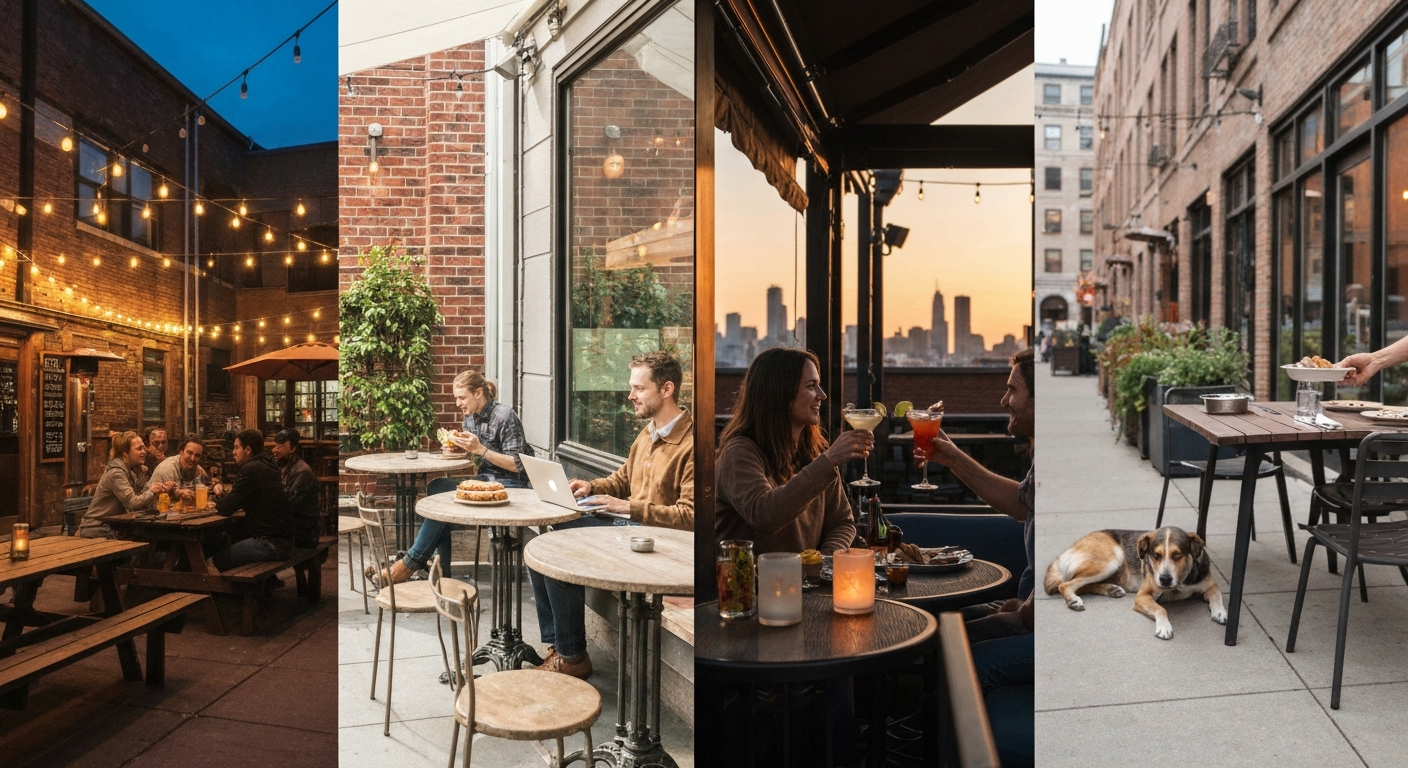
The best value patio isn't just the cheapest one on the block. It's the spot where your food is genuinely good, the setting earns its price tag, and you walk away feeling like you got more than you paid for. That could be a brewery courtyard with $6 pints and string lights, a lunch café with shaded seating and a killer sandwich menu, or a rooftop bar where the view alone justifies the cocktail price. Value is the whole package: price relative to food quality, ambiance, comfort, deals, and whether the place fits your specific situation, dog in tow, midday break, sunset date, or weekend brunch. This guide explains exactly how to define and find that package using our directory at Best Patios Near Me.
What 'Best Value Patios' Actually Means
Hospitality research consistently frames perceived customer value as multidimensional: food quality, service quality, ambiance, and price all feed into whether a guest feels satisfied and whether they come back. That means a single star rating or a price tier symbol tells you almost nothing on its own. A four-dollar-sign rooftop might be excellent value if the food is exceptional and the view is genuinely stunning. A two-dollar-sign dive bar patio might be terrible value if the chairs are broken, the menu is stale, and you wait 40 minutes for a beer. When I use the term 'best value patios' here, I mean venues where the combined experience justifiably earns what you spend.
The value factors I look at fall into two groups: monetary and experiential. Monetary factors are straightforward: menu price range, typical check per person, happy hour or lunch deal availability, and whether there are free or low-cost add-ons like complimentary chips, free live music, or bottomless brunch pricing. Experiential factors take a little more judgment: ambiance and atmosphere (does the patio feel intentional or like an afterthought?), seating comfort (actual chairs with backs, not just barstools on gravel), shade and weather protection, crowd energy at your intended visit time, dog-friendliness, accessibility, and how well the patio suits your goal, a working lunch looks very different from a long Saturday afternoon with friends.
The Core Value Factors at a Glance
- Price and typical check per person (lunch vs. dinner pricing matters — the same patio can shift a full price tier depending on when you visit)
- Menu quality relative to price (fresh, house-made items signal more value than frozen apps at restaurant prices)
- Happy hour, lunch specials, or daily deals (time-limited deals change often — always verify directly on the venue page or by calling ahead)
- Ambiance and setting (views, landscaping, lighting, overall feel — does it justify sitting outside rather than in?)
- Seating comfort (cushioned chairs, table space, shade structures, misters, or heaters for shoulder-season visits)
- Dog-friendliness (fenced areas, water bowls on-site, stated pet policy — service animals are always permitted under ADA Title III regardless of pet policy)
- Lunch suitability (dedicated lunch menu, hours that start at or before noon, shaded daytime seating)
- Accessibility (step-free entry, accessible restrooms, wide pathways between tables)
- Crowd and noise level at your target visit time (a buzzy Friday-night scene is great for some outings and a dealbreaker for others)
Quick Value-Check: A Checklist You Can Use Right Now
Before you commit to a reservation or drive across town, run through this checklist. It takes about three minutes on any venue page and will save you a disappointing visit. I use a version of this every time I'm scoping somewhere new.
- Check the price tier and a typical check. Look at the menu and estimate what a real meal (appetizer or drink, main, one more drink) costs per person. If it's over your budget for the occasion, move on.
- Scan for deals. Is there a happy hour? A lunch special? A fixed-price option? Deals can drop the effective price by 30–50% at some venues.
- Confirm outdoor seating exists and is substantial. A single table near the front door doesn't count. Look for photos showing real patio space.
- Check shade and weather coverage. If you're going midday in summer, no shade means a miserable visit regardless of food quality.
- Read 5–10 recent reviews specifically for patio mentions. Search 'patio,' 'outside,' or 'outdoor' in review text to filter fast.
- Verify dog policy if you're bringing a pet. Look for explicit mentions: 'dogs welcome on the patio,' water bowls, a fenced area. Silence on the topic usually means ask before you go.
- Confirm accessibility if it matters for your group. Check Google Business Profile attributes or Wheelmap.org for step-free access and restroom details.
- Look at photos for crowding signals. Standing-room-only photos at 7 p.m. on a Tuesday suggest you'll be fighting for a table on weekends.
- Note hours and reservation policy. Some of the best-value lunch patios don't take reservations — arriving 10–15 minutes early makes the difference.
- Check the last review date. A glowing review from three years ago tells you very little. Prioritize anything posted in the last six months.
How to Search the Directory: City, Neighborhood, and Venue Type
Best Patios Near Me is built around three search layers: city, neighborhood, and venue type. Using all three together is the fastest way to surface options that actually match what you're looking for. Here's how to move through them.
Step-by-Step Search Guide
- Start at the city level. Use the city search bar or browse the city index to land on your target city's patio page. Each city page aggregates all venue listings, top-rated spots, and any editorial picks specific to that market.
- Narrow to a neighborhood. Once you're on a city page, use the neighborhood filter or scroll the neighborhood list to zero in on the area that's convenient for you — whether you're a local near your office or a traveler staying downtown.
- Select a venue type. Choose from restaurants, bars, or breweries depending on what kind of outing you're planning. Restaurant patios tend to have full food menus and table service; bar patios lean toward drinks with lighter food; brewery patios are usually the most casual and often the most budget-friendly.
- Apply attribute filters (see the filter guide below) to match your specific needs: dog-friendly, lunch hours, happy hour, views, or accessibility.
- Browse the resulting listings. Each venue card shows a price tier, a quick ambiance tag, and a user rating. Click through to the full venue page for photos, a menu summary, hours, and recent reviews.
- Save or compare venues. Use the comparison feature to stack two or three options side by side before deciding — the table template in this guide maps directly to that view.
Getting the Most Out of Site Features
The directory has several features beyond basic search that are genuinely useful when you're trying to nail down a great-value patio. Here's how I use them.
City Pages
City pages are the editorial hub for each market. Beyond the listing grid, they typically include curated picks (best brunch patios, best happy-hour patios, best dog-friendly patios in that city), a map view, and neighborhood breakdowns. If you're traveling somewhere new, start here for a quick lay of the land before drilling into specifics. I find the editorial picks especially useful as a shortcut when I only have an hour to plan.
Neighborhood Lists
Neighborhood lists matter more than people give them credit for, especially when you factor in travel time and parking. A stunning waterfront patio 40 minutes from where you're staying might lose its value edge once you account for the logistics. Neighborhood pages also tend to surface hyper-local gems that don't appear in citywide 'best of' roundups, the kind of places regulars know and visitors almost always miss.
Venue Pages
Each venue page is the ground truth for a listing: hours, price tier, patio attributes (covered, heated, dog-friendly, accessible), a photo gallery, and aggregated review scores pulled from Google, Yelp, and TripAdvisor. For programmatic access to Yelp business listings and reviews, see Yelp Fusion API, Business Search (Yelp Developers) (as example of review source & API) Yelp Fusion API — Business Search (Yelp Developers) (as example of review source & API). These three platforms represent the most widely used public review pools for U.S. restaurants and bars and give the most reliable baseline for ambiance and service sentiment. Look at the attribute tags first, then photos, then reviews, in that order.
User Reviews and Maps
User reviews on venue pages let you filter or search review text for specific keywords, 'shade,' 'dog,' 'loud,' 'parking,' 'wait.' That's worth doing before any visit because aggregate scores hide a lot of nuance. A 4.2-star patio might have glowing food reviews and consistently mediocre comments about patio service specifically. The map view is most useful for plotting multiple options in a neighborhood and checking walkability between spots, which matters for a progressive bar-patio crawl or a day-trip itinerary.
Filter Guide: The Right Filters for Common Goals
Not all filters carry the same weight for every outing. Here's how to match filters to what you're actually trying to accomplish.
| Your Goal | Primary Filter | Secondary Filter | What to Watch For |
|---|---|---|---|
| Cheap eats on a patio | Price: $ or $$ | Lunch hours OR Happy hour | Menu scope — a cheap menu with only 3 items isn't much of a deal |
| Happy hour drinks | Happy Hour tag | Bar or Brewery venue type | Verify hours directly — deals change seasonally |
| Bring your dog | Dog-Friendly filter | Fenced patio attribute | Service animals are always allowed; non-service pets need explicit venue confirmation |
| Views and ambiance | View tag (water, skyline, rooftop) | Ambiance: upscale or scenic | Peak-daylight timing matters — check sunset time vs. your reservation |
| Lunch outing or work break | Lunch hours filter | $ or $$ price tier | Shaded daytime seating is critical — check photos for coverage |
| Wheelchair or mobility access | Accessible filter | Ground-level patio attribute | Cross-check with Google Business Profile attributes or Wheelmap.org |
| Quiet conversation | Neighborhood: residential or low-traffic | Crowd level: relaxed | Avoid high-turnover bar patios on weekend evenings |
Comparison Table Template: Stack Patios Before You Commit
When you're deciding between two or three options, side-by-side comparison beats reading three separate venue pages. Use the columns below, they map directly to the comparison tool on the site and can also be used as a simple notes template if you're evaluating spots on the fly.
| Attribute | Venue A | Venue B | Venue C |
|---|---|---|---|
| Price tier | e.g. $$ | ||
| Typical check per person | e.g. $18–24 | ||
| Best time to visit | e.g. Lunch, weekdays | ||
| View / setting | e.g. Street-level, trees | ||
| Seating comfort | e.g. Cushioned, covered | ||
| Pet policy | e.g. Dogs on patio, water provided | ||
| Accessibility | e.g. Step-free, accessible restroom | ||
| Crowd / noise level | e.g. Lively evenings, quieter lunch | ||
| Aggregate review score | e.g. 4.3 / 5 | ||
| Happy hour or deal | e.g. Mon–Fri 3–6 p.m. | ||
| Reservation needed? | e.g. Yes / walk-in friendly |
Fill this in from venue pages before you leave home. Even a rough version, price tier, seating comfort, pet policy, and one timing note, is enough to make a confident call and skip the 'should we just go somewhere else?' conversation standing on the sidewalk.
How to Read Reviews and Photos to Actually Verify Value
Aggregate scores are a starting point, not a verdict. A venue with 847 reviews and a 4.1 average might have 200 of those reviews mentioning a patio that was closed for renovation two years ago. Here's how to read past the noise.
What to Trust
- Recent reviews (last 3–6 months) that specifically mention the patio, outdoor seating, or a concrete detail like 'the heaters were on' or 'we sat outside with our dog.' Specificity signals firsthand experience.
- Photo timestamps and metadata where visible — a patio photo from last October is more useful than one from four years ago.
- Consistent patterns across platforms. If Google Reviews, Yelp, and TripAdvisor all mention slow outdoor service on busy nights, that's a real signal, not an outlier. Agreement across platforms is the strongest verification you can do without visiting.
- Mentions of specific menu items with prices — these are hard to fabricate and tell you more about actual spend than a price tier symbol.
- Accessibility and dog-friendly confirmations in reviews, especially ones that mention specifics like 'they brought a water bowl without us asking' or 'there's a ramp at the side entrance.'
What to Discount or Ignore
- One-star reviews about issues unrelated to the patio experience (billing disputes, delivery problems, indoor service).
- Five-star reviews with no detail — 'Amazing! Love this place!' tells you nothing actionable.
- Reviews older than 12 months for any attribute that changes (menu, ownership, seating configuration, pet policy).
- Photo gallery images taken by the venue's marketing team under ideal conditions — look for user-contributed photos showing normal, everyday visits instead.
- Review scores on venues that opened in the last 30–60 days — not enough data volume for reliable patterns yet.
- Complaints about weather — reviewers sometimes rate a venue poorly because it rained, which isn't the venue's fault and doesn't reflect patio quality.
For photos specifically: scroll past the professionally shot hero images and find the candid shots. They'll show you the real table spacing, whether there's actually shade at noon, how crowded it gets, and what the view looks like from a seated position rather than a drone.
Sample Patio Types and What Good Value Looks Like in Each
Every venue type has a different value benchmark. Here's what to expect and what makes each category worth your time.
Restaurant Patios
Full-service restaurant patios are where you're most likely to find strong food value, but also the widest range of quality. A well-run restaurant patio should have the full indoor menu available outside, table service that doesn't make you feel like an afterthought for sitting al fresco, and at least some shade or weather protection. The best restaurant patios feel like an extension of the dining room, not a folding-table overflow section. If you're specifically looking for the best restaurants with patios in your city, the restaurant filter on city pages will surface these quickly. Look for venues where the patio has its own identity, dedicated outdoor furniture, lighting, maybe a firepit, rather than just a sidewalk license.
Bar Patios
Bar patios often deliver some of the best hourly value of any outdoor venue, especially during happy hour. Happy-hour and time-limited deal discovery is frequently handled by dedicated apps and listings such as Sippy Scout, Happy Hour Finder (example of a deal-aggregator app), which aggregate changing offers but recommend verifying details on venue pages or with the venue directly for accuracy blank" rel="noopener noreferrer">Sippy Scout — Happy Hour Finder (example of a deal-aggregator app). The best bar patios have covered sections (so a quick rain shower doesn't end your evening), some form of heating for cooler nights, and a drinks list that goes beyond a single keg of domestic lager. Happy hour at a bar patio can drop your per-person spend dramatically, I've had genuinely excellent evenings on bar patios for under $20 a head. The tradeoff is that bar patios can get loud and crowded fast, especially Thursday through Saturday evenings. If you want the value without the chaos, aim for Sunday afternoons or weekday late afternoons. Browse our dedicated bar patio listings to find options that have explicit happy-hour tags and covered seating in your city. For curated picks and happy-hour options, see our best bar patios section.
Brewery Patios
Brewery patios are consistently among the most value-dense outdoor experiences in most U.S. cities. The pricing tends to be transparent (you see the tap list with prices right away), the atmosphere is casual and unpretentious, dogs are frequently welcome, and the seating is usually spacious enough that you're not elbow-to-elbow with strangers. Many brewery patios also host food trucks, which keeps costs low and adds variety. The one value variable to watch: some taprooms charge a flight fee or minimum that's easy to overlook. Check the tap list prices on the venue page before assuming it fits a tight budget.
Lunch Patios
Lunchtime is genuinely underrated for patio value. The same table at a restaurant patio that costs you $45 at dinner might run $18–22 at lunch, often with the same kitchen and a quieter crowd. Casual cafés and delis with shaded outdoor seating tend to offer the highest lunch-patio value: you're usually looking at $10–16 per person with a real meal, not just snacks. The critical attribute for lunch patios is shade, midday sun in summer can make even a beautiful patio unbearable. Filter for 'lunch hours' and 'shaded seating' together on city pages to narrow this down fast. For a more curated look at midday outdoor dining, the best patios for lunch section of our directory covers this specifically.
Dog-Friendly Patios
Dog-friendly patios vary wildly in what that label actually means. At the best end, you get a fenced or semi-enclosed patio, water bowls brought without asking, and staff who are genuinely fine with your 70-pound Lab stretching out under the table. At the weaker end, 'dog-friendly' means no one will technically kick you out. When reviewing options, look for reviews that mention water bowls, tie-up hooks, or fenced areas. A quick note on a common point of confusion: service animals trained to perform specific tasks are always permitted in any public accommodation under ADA Title III, no documentation can be required. Non-service pets are a separate matter and depend entirely on venue policy and local health codes, so always confirm directly.
Red Flags: Signs a Patio Isn't Worth the Trip
I've shown up to some patios that looked great in photos and turned out to be a real disappointment. These patterns tend to repeat.
- Standing-room-only setup with no real seating: a patio that's basically a sidewalk with high-tops and no chairs is not a dining experience, it's overflow management.
- Outdoor-only menu that's a stripped-down version of the indoor menu at the same prices: you're paying restaurant prices for bar-snack options.
- No shade and no mitigation: no umbrellas, no overhead cover, no trees. In summer, this makes the patio unusable from roughly 11 a.m. to 4 p.m. in most U.S. cities.
- Very high table turnover pressure: if reviews consistently mention being rushed or if the reservation slot is under 90 minutes, value drops fast because you're paying full price for a compressed experience.
- No weather protection for shoulder seasons: a patio with no heaters, no cover, and no wind barriers is effectively a seasonal asset for 3–4 months of the year, not a year-round value venue.
- Overpriced basics relative to the experience: $18 nachos on an uncovered sidewalk with plastic furniture is not a value patio by any definition.
Planning Your Visit: Timing, Reservations, and Comfort
Reservations and Best Times
Reservation platforms like OpenTable and Resy explicitly surface outdoor dining as a seating option on many listings, which means you can often request a patio table when booking rather than hoping you'll be seated outside. For high-demand patios, especially rooftop or waterfront spots on weekends, book 4–7 days out. For brewery patios and casual bar patios that don't take reservations, arriving 15–20 minutes before your target time on weekdays, or right when doors open on weekends, usually gets you a seat without a wait. Sunday afternoons and weekday lunches remain the lowest-competition windows for patio seating at almost every venue type.
Weather, Shade, and Comfort
The single most-overlooked element of patio planning is sun angle and shade coverage. A patio that's beautifully shaded at 7 p.m. might be in direct sun at noon, and vice versa. If you're planning a summer lunch, check whether photos show shade cloth, pergolas, umbrellas, or mature trees. For evening visits, check whether there's lighting (string lights, lanterns, perimeter lighting), a dark patio gets uncomfortable after sunset regardless of how lovely it looks in daytime photos. Shoulder-season comfort is almost entirely about whether the patio has overhead cover and radiant heaters; most well-run outdoor venues in northern cities roll these out from early fall through late spring.
Bugs, Crowds, and What to Bring
This sounds trivial but makes a real difference: in humid climates and near water, mosquitoes are a legitimate patio tax from late spring through early fall. A few venues in humid markets run outdoor fans or citronella systems, worth noting in reviews if you see it mentioned. Dress in layers for shoulder-season evenings; even covered patios get cold after the kitchen closes and the crowd thins. And if the patio is on a busy street, the sidewalk noise and exhaust factor into your experience in a way that no photo will warn you about, that's where review text earns its value.
If You're a Local vs. If You're Traveling
How you search for a best-value patio changes meaningfully depending on whether you're a regular or a visitor. Locals should prioritize regulars' perks: loyalty to a neighborhood spot often earns you better service, a waived corkage fee, a reserved table during rush, or an early heads-up about new menu additions. The value compounds over time. If you find a patio that scores a 7 or 8 out of 10 on your personal checklist, committing to it as a regular is often more rewarding than perpetually hunting for a 10. Use the directory to verify that your usual spots are still up to scratch, and to scout one or two new neighborhood options per season.
Travelers should flip the priorities: view and convenience matter more when you have one evening in a city. Use city pages to find patios in the neighborhood where you're staying or the area you're exploring that day, cross-referencing with a map view keeps logistics simple. For travelers, the best value patios are usually in the second tier: not the most famous rooftop everyone Instagrams, but the neighborhood spot a block away with great food, comfortable seating, and no 45-minute wait. The neighborhood lists on city pages are built exactly for this kind of discovery.
Public Patios vs. Home Patios: A Quick Distinction
Everything in this guide is about finding great commercial and public patios: restaurants, bars, breweries, and outdoor dining venues you visit as a customer. If you're here because you're designing or upgrading your own outdoor space at home, building a deck, choosing furniture, planning a pergola, that's a different category entirely. The directory's home patio resources, including the best home patios collection, cover that ground specifically: layout ideas, material comparisons, furniture for different climates, and design inspiration for private outdoor spaces. It's worth exploring if your patio goals extend beyond where to eat and drink to how to build the right setting at home.
Where to Go Next on the Site
Once you've used this guide to build your approach, the fastest next step is to pick your city and start browsing. From any city page you can filter by venue type, neighborhood, or specific attribute and get to a shortlist quickly. If you want a curated starting point rather than a blank search, the best patios editorial lists give you a hand-picked selection for each market, that's a solid shortcut when you're new to a city or want a fast recommendation without filtering from scratch. For type-specific browsing, the best bar patios and best patios for lunch sections run city-by-city and are organized around the same value factors in this guide. For a quick, curated starting point in any market, check our editorial best patios lists. Explore, compare, and keep your own running list, the best patio you've ever had is probably one you haven't found yet.
FAQ
What definition of “best value patios” should this article use?
Define 'best value patios' as outdoor dining/drinking spaces that deliver the strongest combination of monetary value (price level, deals/happy hour) and experiential value (ambience, menu quality, service, seating comfort, views, pet- and accessibility-friendliness). This mirrors hospitality research showing perceived value is multidimensional (price + experience) and predicts satisfaction and revisit intent.
Which core research and evidence sources are required to make this city-agnostic, evidence-based piece?
Use peer-reviewed hospitality literature for the multidimensional value concept; applied methods guidance (choice/conjoint studies and survey best practices) to weight attributes; directory APIs and reservation platforms (Yelp Fusion, Google Business Profile, OpenTable/Resy) for structured venue metadata and filters; menu aggregators (Allmenus/MenuPages) for price & lunch signals; local media/deal aggregators for time-limited offers; major review sources (Google Reviews, Yelp, TripAdvisor) for sentiment and experiential signals; photo sources (Google/venue Instagram) for visual evidence; accessibility datasets (Wheelmap) and ADA guidance for service-animal and access rules. Also follow platform API/embed and copyright requirements when using photos or reviews.
What concrete patio attributes should be measured and displayed in the directory?
Essential attributes: price level (avg check / menu price signals), happy hour/deals (yes + time windows), outdoor seating (yes/no/covered), ambience (casual/romantic/rooftop/etc.), view (water/city/park/none), seating comfort & shade, dog-friendliness (pets allowed vs service animals only), lunch-suitability (menu/hours), accessibility (step-free, restroom access), typical crowding/volume, reservation options, and operating hours. These follow from research on value dimensions and from common directory filters.
How should attributes be weighted to form a reproducible “value score”?
Use a choice-based/conjoint-informed approach: run a pilot survey with Likert or choice tasks to derive relative weights for core attributes (price, food quality, ambience, deals, comfort, views, pet/accessibility). Alternatively, apply expert/default weights (e.g., food 30%, ambience 25%, price/deals 20%, comfort 10%, view 10%, accessibility/pets 5%) and document them. Record data sources and confidence for each attribute to keep scoring transparent and reproducible.
What survey and data-collection best practices should we follow?
Use validated survey design: Likert-style scales, consistent direction, pilot test questions, and combine closed numeric items with a few open-text fields for nuance (ambience, comfort). Aggregate review text for aspect-based sentiment (ambience/service/crowding). Keep sampling representative of local patrons and travelers when possible.
Which APIs and data pipelines are recommended for sourcing structured venue data and updates?
Primary pipelines: Yelp Fusion and Google Business Profile for structured metadata and reviews; OpenTable/Resy for reservation/outdoor-dining flags; Allmenus/MenuPages for menu prices and lunch-items; periodic local-media or happy-hour aggregators for deal verification. Use API rate limits and a verification workflow (venue claims or editorial checks) for time-sensitive fields like happy hour.
Next Article
Best Patios for Lunch: How to Find the Right One
Find the best patios for lunch with shade, pacing, menu, noise, seating, and filters like dog-friendly and accessibility